
Carroll County Weekly Arrest Log
Carroll County publishes no weekly arrest log. There is no 72-hour booking list either. Nor does any county office post a searchable multi-day blotter. The Sheriff's Office and county jail offer no such record. Carrollton Police provide a records-request route but no web blotter. Minerva's dispatch keeps internal arrest and call logs without publishing results. Malvern leans on sheriff-provided police service. What remains official is selective. Sheriff press releases highlight certain public-safety events, not every booking. Municipal Court records begin after filing. Common Pleas dockets follow felonies on their own timeline. None states a lookback window, photo rule, or download option. A feed pieced together from stale third-party entries would misstate both coverage and freshness.
Reconstruct Carroll Arrest Reports
A careful multi-day review works backward from dated records. Assume no source covers the whole county. Log the agency, event date, publication date, and record stage. One arrest can appear in five places. A jail commitment, police report, court complaint, press announcement, and newspaper brief may each state different facts about the same event.
- Review the Carroll County Sheriff press archive for dated releases. Treat it as a selective news source, never as a complete booking log.
- Search the Carroll County Municipal Court system by name or another accepted field. Confirm important information in writing or at the court.
- Check the Common Pleas Clerk for felony filings, pleas, capias activity, and dispositions that may arise later than the first arrest record.
- Request city records from Carrollton or Minerva when that agency made the arrest. Use sheriff records for sheriff events and Malvern police-service matters.
- Compare local reports only after official sources. Keep their publication dates and selective nature visible.
Use the Daily Arrest Report for same-day questions. It tracks who is in custody now. A multi-day reconstruction fits a different need, following context, delayed filings, and records that have moved past the initial booking.
Carroll Arrest Log Field Map
No single log shows standard columns. Every field must be tagged with both its fact and its source stage. Jail registers carry statutory minimums. Court and news records add later detail. Dates, agencies, and docket numbers keep entries apart, so never merge two records just because the names match.
| Field | Likely source and limit |
|---|---|
| Name | Jail, agency, or court spelling; confirm identity before combining records |
| Event or commitment date | Jail or incident record; may differ from filing and publication dates |
| Arresting agency | Shows which office may hold the report |
| Cause or listed charge | An charge at that source stage |
| Case or docket number | Connects a court filing to later procedural events |
| Bond, plea, or capias | Court-stage data that may change as the case proceeds |
| Disposition | The recorded court result, distinct from an arrest or booking |
| Release or transfer | Jail status at a stated time; not reliably supplied by news coverage |
| Photograph | No official online Carroll County blotter photo policy was found |
Label a missing field as unavailable, not as "none." Silence means nothing was published. A missing press item is especially weak evidence, since the sheriff archive picks newsworthy events. Court searches can lag booking too, and some material belongs in a different court entirely.
Carroll Sheriff Press Is Selective
The sheriff's press archive is official, dated, and worded by the agency itself. It is not an arrest register. A major investigation gets a release. Routine jail commitments go unmentioned. When a release names an arrest, keep the agency's terms and date exactly. The official sheriff archive shows the county's selective release format.
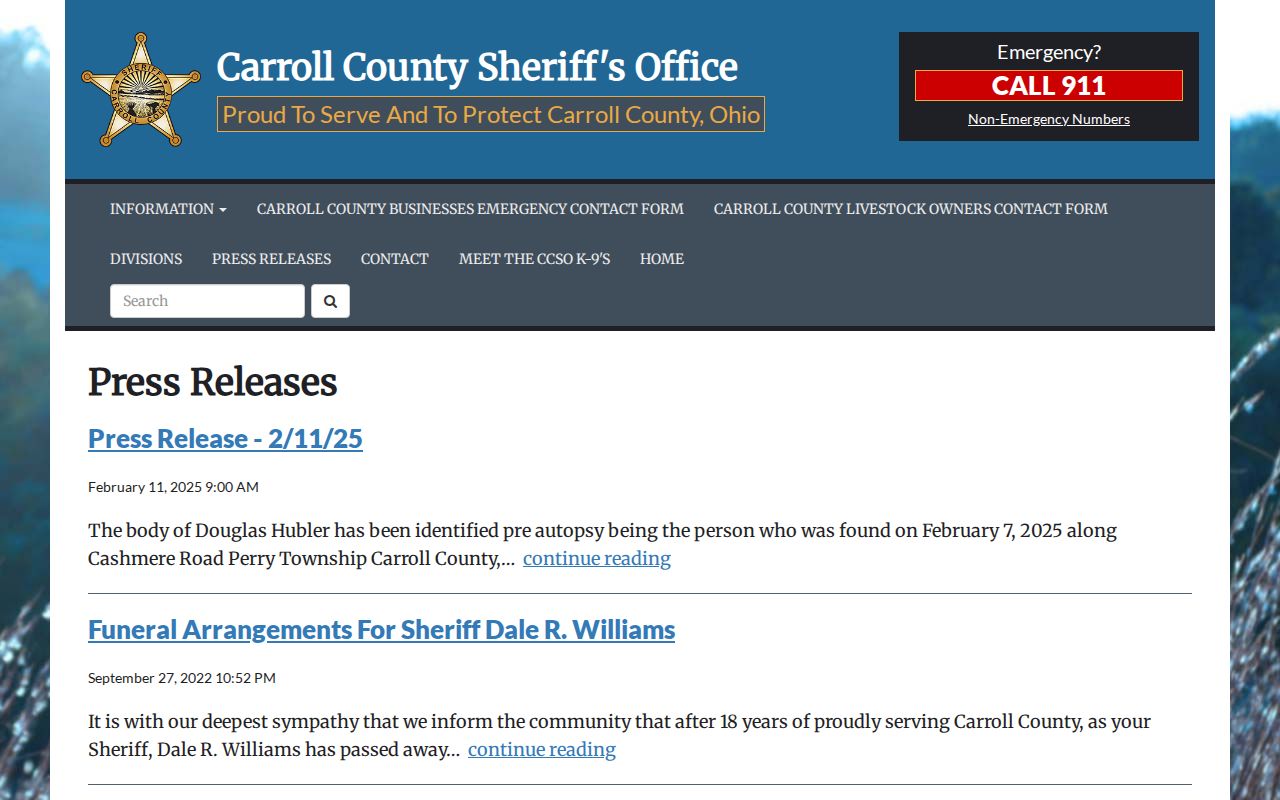
That archive shows dated public-safety notices rather than a full booking blotter. The difference matters in a weekly review. Counting releases cannot measure arrest volume. It cannot gauge jail population either. Silence may simply mean no release was issued, so the archive confirms what it reports but never proves what it omits.
Carroll Court Reports Add Context
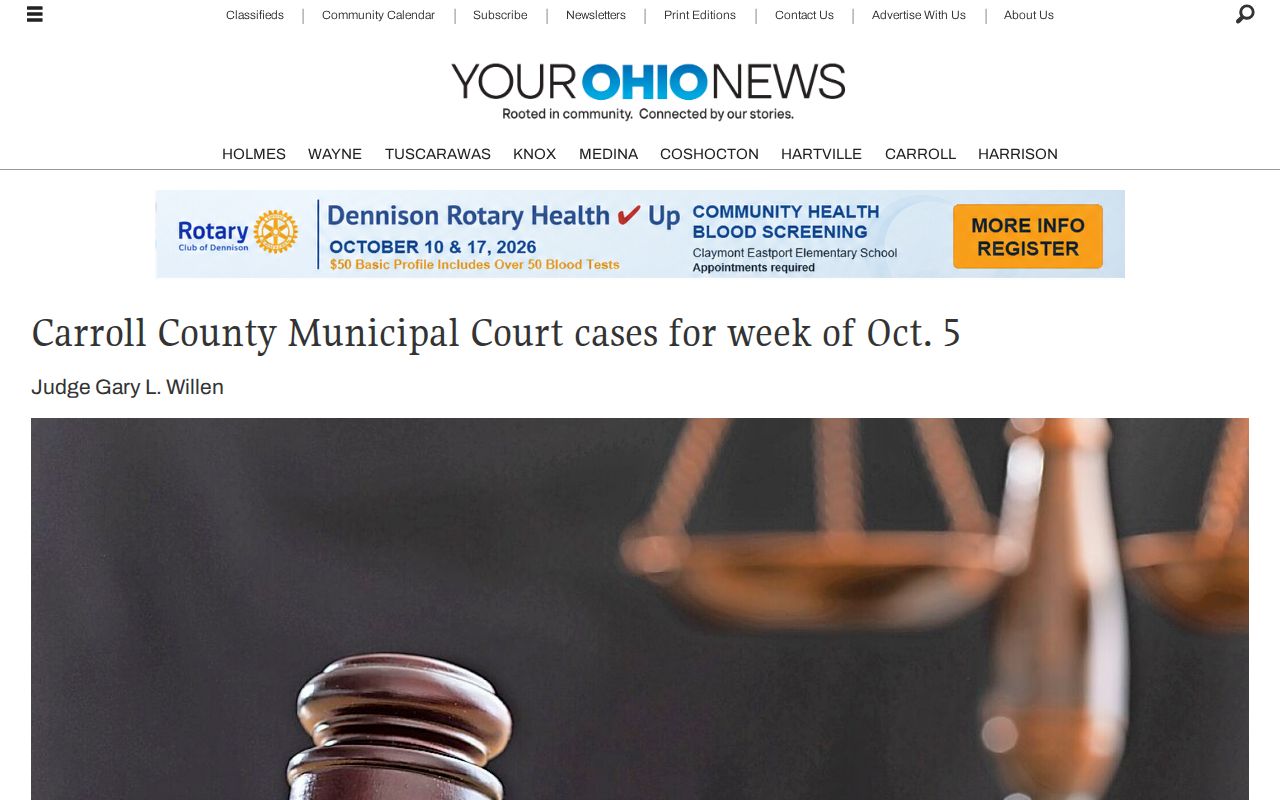
YourOhioNews offers the best local multi-day substitute for a Carroll County blotter. Its Carroll County section runs recurring Municipal Court and Common Pleas reports. Stories may list charges, bonds, pleas, or capias activity. This is reporting, not a live roster. Coverage is selective. The weekly Municipal Court report illustrates that dated coverage, so check each story against the official court record.
Common Pleas coverage serves a different slice. It follows felony filings after the initial event. Those reports can show pleas, case outcomes, or capias activity. A capias is a court order bringing a person before the judge. Those entries mark later court business, not fresh bookings. The local Common Pleas report shows that later court-record layer.
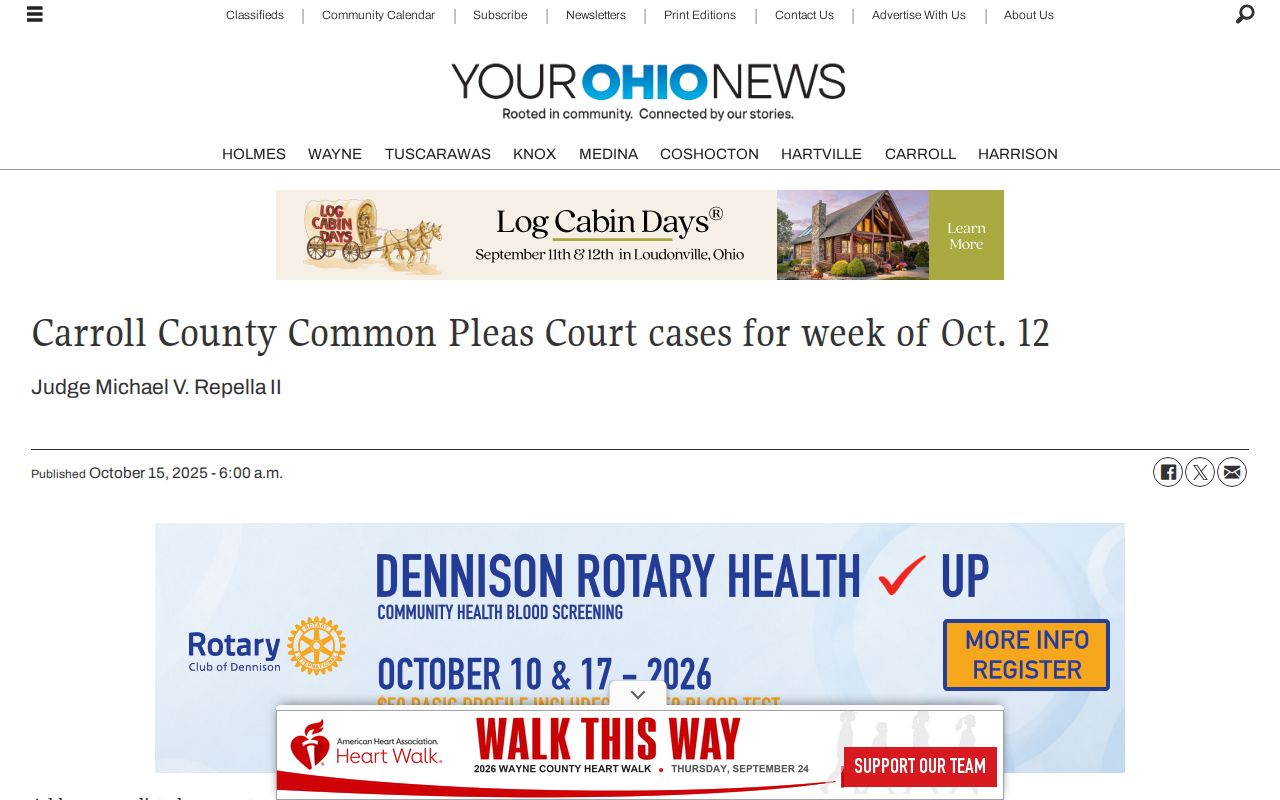
This report shows why labels matter. A plea or disposition is a later court event, not the original booking entry in any Carroll County arrest record.
Carroll Arrest Trends Need Care
Numbers help, but only when you know what they count. A 2025 local report covered Carroll County Municipal Court files. It tallied 783 criminal and traffic cases. The mix included 102 felonies, 281 misdemeanors, 50 DUI cases, and 350 other traffic matters. It also broke filings out by agency. The sheriff accounted for 314 cases; Carrollton Police handled 233. Read those as court files, nothing more. They are not booking totals or arrest counts. One Carroll County arrest can carry several charges. Some citations never reach the jail at all. A case may shift courts, shrink to a lesser count, or close without any conviction. Any trend piece should name its unit, its time span, and its source. Then a single number can be quoted.
| Source measure | What it does not prove |
|---|---|
| Annual Municipal Court filings | Number of county jail bookings |
| Sheriff press releases | All arrests during the period |
| Weekly newspaper court briefs | Complete arrest or conviction totals |
| Internal agency arrest log | Public web availability or countywide coverage |
City Arrest Logs Differ
Arrest records in Carroll County live in pieces, agency by agency. Minerva Police is a good example. Dispatch there keeps incident reports, an arrest log, a call log, and a records-management system. That log stays internal, with no web blotter posted. Minerva books its prisoners into county jails. Its own department jail closed in April 2024. So a Minerva incident report may sit with one office. The county custody entry can rest with another. Carrollton Police runs its own department and a village records request form. It posts no online arrest log. Malvern works differently. The village states the Carroll County Sheriff's Office provides its police service. A Malvern search should start with the sheriff. Ask first, then ask again. One agency page can't carry the whole county. Request the date range, the record type, and the event location. If the first office lacks the record, ask which custodian keeps it. Keep incident details apart from jail status and later court outcomes.
Archive Carroll Arrest Records
Carroll County posts no official blotter. No lookback window exists as a result. Older arrest research therefore shifts to records requests, court files, news archives, and retention schedules. The sheriff's public-records form can seek a specific jail or incident record. A municipal police report may require a city request instead. Ohio Revised Code §149.43 governs access, permits exemptions, and allows a reasonable response period.
Retention works record by record. Ohio History Connection describes local RC-2 schedules as suggested periods. Local records commissions may approve different terms. The sheriff's office publishes no approved schedule for booking records or photographs. Never borrow a retention term from another county. Ask the custodian for the schedule covering the jail register, arrest jacket, release record, or photograph at issue.
The Ohio History Connection State Archives and Ohio Memory microfilm services can help locate transferred records or historical newspaper references. Archival silence proves nothing. An old story may report an arrest yet omit the outcome. A transferred register can carry access limits.
Note: Preserve the source date and record stage so an old allegation is not presented as current custody or a final court result.
Carroll Charges Versus Dispositions
Booked, charged, and convicted are three different things. Booking means the jail processed a commitment. A charge is a filing stated in a complaint, citation, indictment, or intake record. Conviction requires a court disposition. Dismissal, amendment, acquittal, diversion, probation, sealing, and expungement each mark a separate legal event. A weekly arrest log should hold every step. Keep the early charge and any later verified result, each clearly dated. Custody status needs a fresh check every time. Release or transfer can make a prior status stale.